
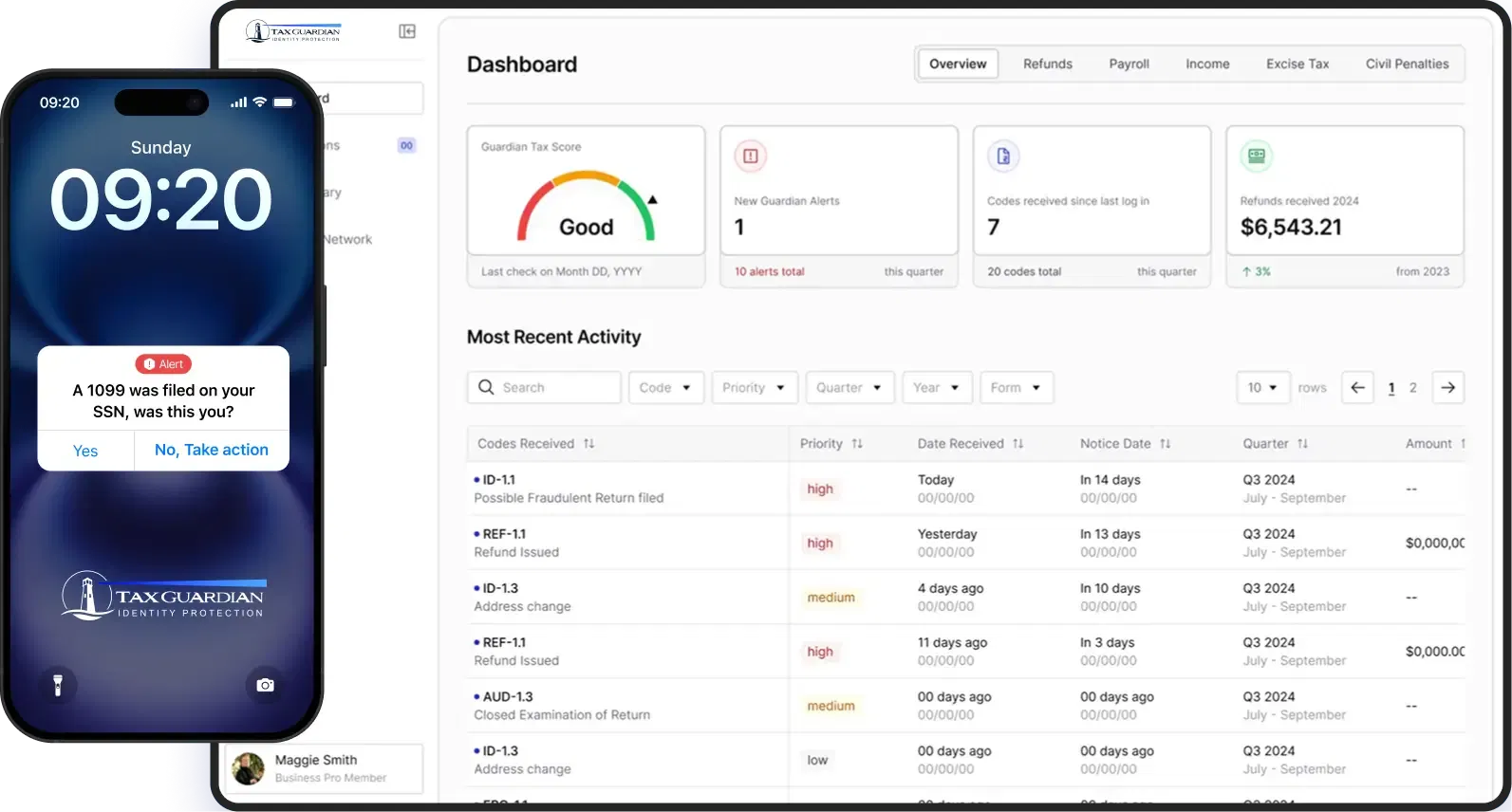
Quick Review: Yes. Tax Guardian’s IRS transcript monitoring is designed to work directly with the taxpayer. An accountant or tax preparer does not need access to the Tax Guardian account or IRS records unless the taxpayer separately chooses to involve that professional.
A New Channel for Evaluating Tax Identity Protection
LIMITED-TIME OFFER: USE CODE 3 MONTHS FREE
Tax identity theft can be difficult to detect because it often happens outside the normal tax-preparation process. A taxpayer may work with a trusted accountant, file returns on time, and still discover that someone has used their Social Security number to submit a fraudulent return or create unauthorized IRS activity.
That concern raises an important privacy question: Does IRS transcript monitoring require an accountant to have access to the taxpayer’s IRS information?
For Tax Guardian’s consumer monitoring service, the answer is no. The monitoring relationship is established between the taxpayer, Tax Guardian, and the IRS. The taxpayer completes the secure enrollment process, and Tax Guardian monitors relevant IRS activity tied to the taxpayer’s identity. The accountant does not need to log in, receive credentials, or access the Tax Guardian dashboard.
How IRS Transcript Monitoring Works
An IRS transcript is an official summary of tax information and account activity. It is not always a complete copy of a filed tax return, but it can contain important details about filings, income documents, account changes, and transactions recorded by the IRS.
The IRS provides several transcript types, including:
- Tax return transcripts, which generally show most line items from an original tax return.
- Tax account transcripts, which show account activity such as payments, adjustments, and certain transactions.
- Wage and income transcripts, which show information reported to the IRS by employers and other payers.
- Record of account transcripts, which combines information from tax return and tax account transcripts.
- Verification of non-filing letters, which confirm that the IRS does not have a filed return for a particular period.
Tax Guardian uses its software to securely access IRS transcript information on the taxpayer’s behalf. Depending on the protection plan, the service monitors for activity such as suspicious filings, income mismatches, unauthorized changes, and indicators of potential refund theft.
The goal is to identify unusual tax activity earlier than a taxpayer might through a mailed IRS notice, a rejected tax return, or a missing refund.
Does an Accountant Need Access to Tax Guardian?
An accountant does not need access for Tax Guardian’s monitoring to work. The taxpayer can create and manage a personal Tax Guardian account without adding a CPA, enrolled agent, tax preparer, or other financial professional.
This means:
- The taxpayer controls the Tax Guardian login.
- Monitoring is connected to the taxpayer’s identity and IRS records.
- Alerts are directed to the contact information selected by the taxpayer.
- The accountant does not automatically receive IRS transcript information.
- The taxpayer may share an alert or report with the accountant later if professional assistance is needed.
This arrangement is useful for taxpayers who want to separate tax preparation from tax identity protection. An accountant may prepare a return and advise on tax matters, while Tax Guardian provides a separate layer of monitoring focused on potential identity misuse.
Tax Guardian’s privacy policy explains how personal information is collected, used, protected, and disclosed. Taxpayers should review that policy and their account settings before enrolling in any service involving sensitive financial or identity information.
Tax Guardian Monitoring Versus What a Tax Preparer Sees
Tax Guardian and a tax preparer may both work with tax-related information, but they serve different purposes.
What a tax preparer typically sees
A tax professional usually works with information the taxpayer provides for preparing a return, such as:
- W-2 forms
- 1099 forms
- Mortgage interest statements
- Receipts and expense records
- Prior-year tax returns
- Brokerage and retirement account statements
- Business income and expense documentation
A tax preparer may also obtain IRS transcripts when the taxpayer gives the professional appropriate authorization. The IRS explains that professionals using its Transcript Delivery System must have a properly executed Form 2848 or Form 8821 on file.
Form 2848, Power of Attorney, authorizes an eligible representative to act for the taxpayer before the IRS and inspect confidential tax information. Form 8821, Tax Information Authorization, allows a designated person or organization to inspect or receive specified confidential tax information for the tax types and years listed on the form.
Those authorizations are separate from Tax Guardian enrollment. A taxpayer does not need to give an accountant power of attorney or tax information authorization simply to use Tax Guardian’s monitoring service.
What Tax Guardian monitors
Tax Guardian is focused on identifying unexpected IRS activity connected to the taxpayer’s tax identity. Depending on the plan, monitoring may identify:
- A tax return the taxpayer did not file
- Suspicious refund activity
- W-2 or 1099 income that does not match the taxpayer’s records
- Unexpected IRS account changes
- Potential misuse of the taxpayer’s Social Security number
- Activity that may indicate tax identity theft
A tax preparer generally reviews information during the preparation or resolution of a tax matter. Tax Guardian is designed to provide ongoing visibility throughout the year, including periods when the taxpayer is not preparing a return.
How Alerts Reach the Taxpayer
Tax Guardian sends alerts directly to the taxpayer using the communication method associated with the account. The available alert channels depend on the selected plan.
The Tax Guardian protection plans identify the following general differences:
- Core includes basic IRS transcript alerts, basic identity mismatch alerts, and email notifications.
- TIPS adds daily IRS monitoring, tax identity theft alerts through text and email, fraudulent return and stolen refund detection, income mismatch alerts, and access to restoration experts.
- TIPS+ adds enhanced wage-fraud and Social Security number misuse scanning, household coverage, audit defense, and refund replacement protection of up to $1 million per household, subject to plan terms.
An alert does not automatically mean that fraud has occurred. Tax activity can change for legitimate reasons, including amended returns, employer corrections, address changes, or IRS processing updates. The alert gives the taxpayer an opportunity to review the information and determine whether action is necessary.
When a concern appears, the taxpayer can decide whether to contact an accountant, Tax Guardian support, the IRS, or another qualified professional. The taxpayer remains in control of who receives the information.

Can Tax Guardian Replace an Accountant?
No. Tax Guardian and an accountant have different responsibilities.
An accountant or tax preparer may help calculate tax obligations, prepare filings, answer tax questions, and communicate with the IRS when properly authorized. Tax Guardian is a monitoring and identity protection service designed to detect suspicious tax activity and provide alerts and response support.
The services can work together without requiring shared account access. For example, a taxpayer might receive a Tax Guardian alert about an unfamiliar income document and then send the relevant details to the accountant for review. The taxpayer chooses whether to share the alert, transcript information, or other documents.
Tax Guardian also does not guarantee that tax identity theft will never occur. Monitoring is intended to improve visibility and shorten the time between suspicious IRS activity and the taxpayer’s awareness of it. Prompt review and appropriate action remain important.
Steps to Protect a Social Security Number
Taxpayers searching for ways to protect my Social Security number should use several safeguards rather than relying on a single tool.
Recommended steps include:
- Monitor IRS activity. Use a service such as Tax Guardian to look for unexpected tax filings, income records, and account changes.
- Create an IRS Online Account. The IRS provides access to available tax records and transcripts after identity verification.
- Use an IRS Identity Protection PIN when appropriate. An IP PIN helps prevent someone else from filing a federal tax return using the taxpayer’s Social Security number.
- Secure tax documents. Store W-2s, 1099s, prior returns, and identity documents in a protected location.
- Question unfamiliar communications. The IRS generally initiates contact through mailed notices rather than unexpected calls, texts, or social media messages.
- Act quickly on alerts. Review unfamiliar activity and follow the instructions provided by the IRS or a qualified identity restoration professional.
The IRS’s Identity Theft Central provides official guidance for taxpayers who suspect that someone has used their information.
Frequently Asked Questions
1. Does Tax Guardian require my accountant’s permission?
No. Tax Guardian’s consumer enrollment is designed for the individual taxpayer. An accountant does not need to approve the account, receive login credentials, or access the dashboard for monitoring to function.
2. Will my accountant automatically receive Tax Guardian alerts?
No. Alerts are sent to the contact information associated with the taxpayer’s Tax Guardian account. The taxpayer may choose to share an alert or report with an accountant if professional review is helpful.
3. Is IRS transcript monitoring the same as giving an accountant power of attorney?
No. IRS transcript monitoring through Tax Guardian is separate from IRS authorization forms. Form 2848 gives an eligible representative broader authority to represent a taxpayer, while Form 8821 authorizes access to specified confidential tax information. Tax Guardian enrollment does not require the taxpayer to give either form to an accountant.
4. What should I do if an alert shows a return or income document I do not recognize?
Review the alert carefully and compare it with personal tax records. If the activity remains unfamiliar, contact Tax Guardian support and follow the IRS’s identity theft guidance. The taxpayer may also provide the information to an accountant or tax professional for additional review.
Keep Tax Identity Protection Under the Taxpayer’s Control
Tax Guardian IRS transcript monitoring is designed to give taxpayers direct visibility into activity connected to their tax identity without requiring accountant or tax preparer access. That separation allows an accountant to focus on preparation and tax advice while the taxpayer receives proactive monitoring and alerts throughout the year.
For individuals concerned about IRS identity theft, tax identity theft, or how to protect a Social Security number, direct monitoring can streamline the process of identifying suspicious activity. Learn more about Tax Guardian’s tax identity protection service or start secure enrollment.
Yoast SEO Fields
- SEO Title Tag: IRS Transcript Monitoring Without Accountant Access | Tax Guardian
- Meta Description: Learn how Tax Guardian monitors IRS transcripts directly for tax identity theft without giving your accountant access to your account or alerts.
- Focus Keyword: IRS transcript monitoring
Legal Disclaimer
Tax Guardian Software Solutions provides access to legal services offered by the Tax Guardian Network. None of the above corporate entities, nor its officers, employees, or sales associates directly or indirectly provide legal services, representation, or advice. Any forms provided are not legal advice and should not be construed as such. You should consult with a lawyer to confirm the form meets your needs. Use of this website and the services is subject to Tax Guardian Software Solutions terms of service and data protection addendum.
© 2025–2026 Tax Guardian. America’s First Tax Identity Protection Suite™.







